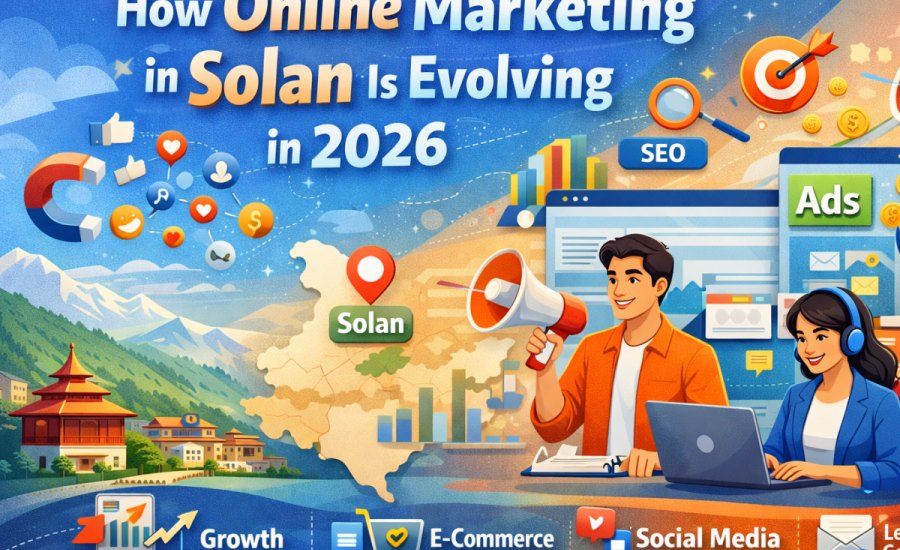
Online Marketing in Solan is changing fast in 2026 — small businesses, local shops, and agencies are adapting to AI-powered tools, stricter platform rules, and a new hyperlocal-first mindset. Below is a human-written, practical look at the trends shaping the local digital scene and what businesses in and around Solan should be doing right now.
Marketers across India are using large language models and AI agents to speed up content creation, automate ad copy testing, and personalize customer journeys. This isn’t just hype: global platforms and search providers are integrating AI to make product discovery and shopping more conversational and personalized, which changes how ads and landing pages are built.
What this means for Solan:
Use AI to generate first drafts of blog posts, ad text, and product descriptions — but always edit for local voice and accuracy.
Automate repetitive tasks (reporting, A/B test setups) so small teams can focus on strategy and local partnerships.
Users searching for services "near me" or by neighborhood now expect immediate, accurate answers. Google’s local signals (business profile, reviews, photos, and localized content) are decisive in 2026, and voice searches are making conversational queries more common. Local businesses that optimize for map listings and hyperlocal content see a measurable uplift in footfall and calls.
Action steps for Solan businesses:
Keep Google Business Profile details current — hours, photos, product menus.
Encourage short, specific reviews mentioning neighborhood names (e.g., “Bakery near Subathu”).
Publish localized pages covering nearby towns and landmarks to capture map-based queries.
New rules tightening platform responsibilities and takedown timelines are appearing across markets — India has moved to accelerate content takedown requirements, and platform policy changes affect how ads and user-generated content are managed. These regulatory shifts mean marketers must be safer about claims, keep better records of ad creatives, and prepare moderation workflows.
Practical implications:
Maintain transparent tracking practices and clearly marked sponsored content.
Keep copies of ad creatives and influencer agreements in case platforms request evidence.
Prefer first-party data (customer lists, CRM) over risky third-party data sources.
Across Indian towns, social commerce is turning product discovery into an in-app purchase moment — short video formats on platforms like YouTube Shorts and regional apps convert attention into orders quickly. For Solan’s retailers and artisans, a 30–60 second product demo or a local craft story can outperform static posts.
How to leverage it:
Create short, mobile-first product demos and behind-the-scenes clips.
Use local festivals and seasonal events to tie content to timely shopping moments.
Partner with micro-influencers in nearby cities (Chandigarh, Shimla) who can showcase products to a wider regional audience.
People in smaller cities respond to content that reflects local life — language, references, and community events. Brands that create neighborhood guides, local FAQ pages, or sponsor community events build stronger recall and repeat business than those relying on generic national campaigns.
Content ideas for Solan:
“Best chai spots in Solan” or “Weekend walks near Solan College” style listicles.
Video interviews with local shop owners or artisans.
Event pages for local fairs with structured data so search engines surface them easily.
In 2026 the focus shifts from impressions to micro-conversions: clicks-to-call, direction requests, coupon downloads, and chat starts. For local marketers, measuring these signals gives a faster read on campaign health than reach or impressions.
Set up:
Track calls from ads as conversions.
Use UTM-tagged discount codes for social posts to directly credit sales.
Monitor Google Business Profile actions (direction requests, calls) alongside website analytics.
Agencies and businesses in Solan are adopting compact, integrated stacks — a CRM that syncs with WhatsApp, a lightweight CMS for quick localized pages, and an automation tool to push deals at peak times. The goal: do more with fewer resources while maintaining local relevance.
Suggested stack:
Google Business Profile + local landing pages
Lightweight CRM (for order & follow-up)
WhatsApp Business for customer service and offers
Simple social scheduler + video editor app
Training programs and short courses are available in Solan and nearby towns, producing marketers who understand both digital tools and local buying behavior. Investing in one or two upskilled employees (content + local SEO) gives an outsized competitive advantage.
Update Google Business Profile and add seasonal photos.
Run a one-week short-video campaign showing a best-seller.
Set up call-tracking and map-direction tracking.
Collect 20 fresh local customer reviews.
Create two hyperlocal blog pages (landmark + neighborhood).
Test an AI-assisted ad-copy workflow but humanize every output.
Use WhatsApp Business for order confirmations.
Audit ad creatives for policy and compliance.
Launch a micro-influencer trial in Chandigarh / Shimla.
Train staff on basic local SEO and review management.
Online Marketing in Solan in 2026 is not about copying big-city playbooks — it’s about blending modern tools (AI, short-form video, tracking) with hyperlocal authenticity and trust. Small teams that focus on measurable local actions — reviews, calls, maps, and community content — will grow faster than those chasing vanity metrics. Start small, measure micro-conversions, and let local stories do the heavy lifting.
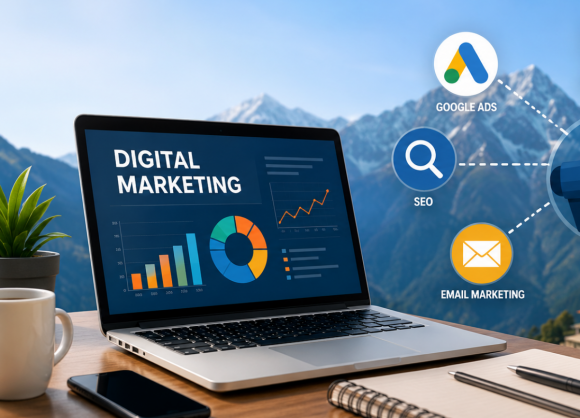
In today's competitive online market, every business needs a strong digital prese...
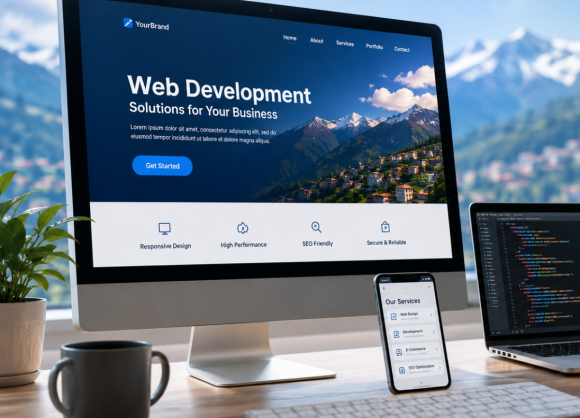
In today's digital world, having a professional website is no longer optional for...

If you're planning to grow your ...
In today's digital world, havin...